
Quiet electric toothbrushes are more than a luxury—they’re about comfort and consistency. While many electric toothbrushes deliver strong cleaning power, some create loud buzzing or harsh vibrations that make brushing uncomfortable. In this article, we’ll explain how noise and vibration affect your brushing experience, what makes a toothbrush truly “quiet,” and why the BrushO Smart Electric Toothbrush, operating at under 55 decibels, offers the perfect balance of performance and peace.
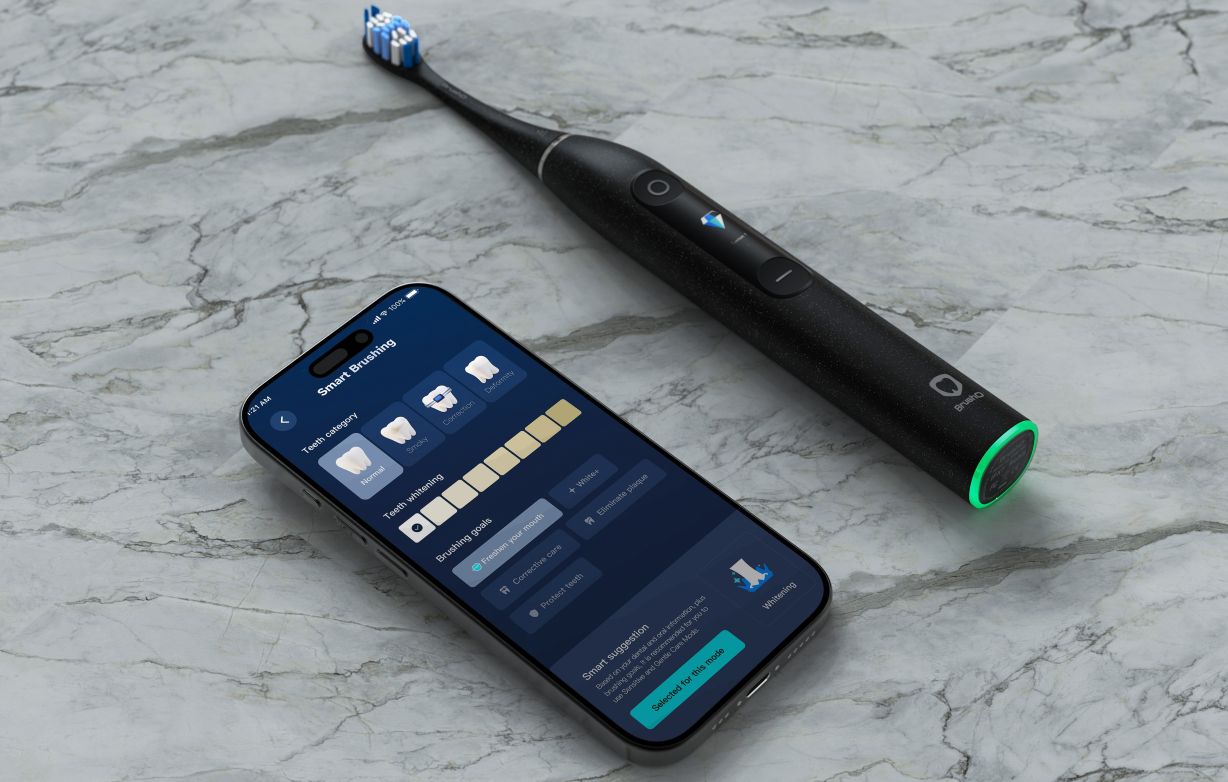
Noise levels may not seem important at first, but they can affect how—and how often—you brush:
👉 The ideal toothbrush should be powerful enough to clean thoroughly, but quiet enough to maintain a pleasant routine.
Electric toothbrushes use either sonic vibrations or oscillating rotations to clean. While effective, excessive vibration can cause:
A well-engineered toothbrush balances vibration frequency for effective plaque removal without sacrificing comfort.
Noise levels are usually measured in decibels (dB):
👉 A quiet toothbrush should operate below 60 dB, ensuring powerful cleaning without disruptive noise.
The BrushO Smart Electric Toothbrush was designed with comfort in mind:
Brushing stays quiet—comparable to a soft conversation—without losing power.
Gentle yet effective, BrushO’s sonic technology cleans deeply while staying comfortable for sensitive gums.
Choose from 8 modes, including Gentle and Gum Care, to adjust vibration intensity to your preference.
Designed to absorb vibration smoothly, reducing harsh feedback in your teeth and gums.
The slim handle and lightweight design reduce hand fatigue during longer brushing sessions.
Switching to a quiet electric toothbrush like BrushO brings:
Q1: Are all electric toothbrushes noisy?
No. High-quality models like BrushO are designed to stay under 55 dB while still being powerful.
Q2: Is vibration harmful to teeth?
Not if balanced correctly. BrushO’s sonic vibration is safe and effective.
Q3: Why choose a quiet toothbrush?
Comfort, less disturbance, and better brushing compliance.
Q4: Does quieter mean weaker cleaning?
Not with BrushO. Its optimized motor delivers strong cleaning without excessive noise.
Quiet electric toothbrushes offer the best of both worlds: effective cleaning and a comfortable brushing experience.
With its low-noise motor under 55 dB, ergonomic design, and customizable modes, the BrushO Smart Electric Toothbrush proves that powerful cleaning doesn’t have to be loud.

Morning lip dryness often points to nighttime mouth breathing because airflow and lower saliva during sleep can dry the lips and oral tissues faster than people expect.

Morning jaw fatigue can be an early sign of overnight clenching because repeated nighttime force strains muscles, teeth, and supporting tissues even before obvious wear appears.

Children often develop cavities faster than adults because enamel is thinner, routines are less stable, and snacking patterns keep feeding plaque. Understanding those differences helps parents prevent problems earlier.

Consistent brushing streaks matter more than one perfect session because oral health improves through repeated, stable behavior rather than isolated high-performance brushing moments.

The tooth pulp helps explain why some dental pain feels deep, lingering, and hard to ignore. Once irritation reaches inner tissue, the tooth reacts very differently than it does with surface-level sensitivity.

Sharp pain from cold drinks often points to exposed dentin, enamel wear, gum recession, or a developing crack. Knowing what triggers it helps people act before sensitivity turns into a bigger problem.

Jawbone loss can begin after teeth are missing because the bone no longer receives the same functional stimulation from chewing. The change is gradual, but it affects stability, bite patterns, and long-term oral structure.

Dry mouth can turn manageable oral issues into persistent discomfort because saliva supports cleaning, buffering, and tissue protection. Once saliva drops, plaque, irritation, and sensitivity can escalate faster than expected.

Dentin tubules help explain why small changes in enamel or gum coverage can make teeth react quickly. Once these pathways are exposed, everyday triggers like cold, sweetness, or brushing pressure can feel much stronger.

Brushing heatmaps make missed zones visible by turning brushing behavior into a pattern people can review. That matters because most people repeat the same blind spots without realizing it.

Build an oral health data network quickly and at low cost in a way that everyone can build.


Address: RM 1427, 14/F RADIO CITY 505, HENNESSY RD CAUSEWAY BAY, HONG KONG
Code: 000000
Phone: +852-53758652
Email: customerservice@brusho.com